By Oke Peter
As Nigeria races toward solar power, a new environmental challenge is quietly emerging: what happens when millions of solar panels and batteries reach the end of their lives?
For years, solar energy has been celebrated as one of Nigeria's cleanest answers to chronic electricity shortages. From rooftop installations in Lagos, Abuja to mini-grids powering remote communities in Kaduna, Cross River and Nasarawa states, solar systems have become symbols of energy independence.
But beneath the success story lies a strange and largely overlooked reality. Every solar panel and battery has an expiry date.
As Nigeria installs more solar systems to bridge its electricity gap, a future wave of discarded panels and batteries is beginning to take shape. Unlike petrol generators, whose environmental impacts are visible through noise and smoke, solar waste accumulates quietly, often out of sight and outside public discussion.
A joint study by the International Renewable Energy Agency (IRENA) and the International Energy Agency Photovoltaic Power Systems Programme estimates that discarded solar panels could reach 78 million tonnes worldwide by 2050. The same study notes that the recovered materials from retired panels could be worth more than $15 billion if properly recycled.

An aerial view of a solar mini-grid in Northern Nigeria. Photo: Rural Electrification Agency (REA).
Nigeria may not yet be facing waste volumes on that scale, but experts warn the country is heading in the same direction.
A 2026 study titled "E-Waste from End-of-Life Solar Panels and Batteries: No Formal Recycling Framework in Nigeria" published on Researchgate projects that solar-related waste in the country could rise from about 3.3 million kilograms in 2021 to over 60 million kilograms by 2040 if current growth trends continue. The study argues that Nigeria lacks a dedicated framework for managing end-of-life solar equipment.
Most solar systems deployed across homes, businesses and mini-grids rely on either lead-acid or lithium-ion batteries for storage. While panels can last between 20 and 30 years, batteries often require replacement within five to ten years depending on usage patterns.
This means that many of the batteries being installed today could enter the waste stream long before the panels themselves.

A heap of e-waste in Lagos. Photo: Fayefunmi Oluwanifemi
Improper disposal carries environmental risks because lead-acid batteries contain lead and sulphuric acid, while some lithium-ion batteries contain metals and chemicals that can contaminate soil and groundwater if not handled properly. Researchers warn that informal disposal methods such as open burning, dismantling without safety controls, and uncontrolled dumping could create new environmental hazards in communities already struggling with waste management challenges.
Consequently, the technology helping Nigeria reduce pollution could eventually create a different pollution problem if no disposal system is established.
Evidence of the growing concern can already be seen within the recycling sector.
In September 2025, clean-energy impact investor All On announced a $1.5 million investment in Hinckley E-Waste Recycling Limited to establish lithium-ion battery recycling and reuse facilities, as well as used lead-acid battery recycling operations. According to the company, the investment was driven partly by growing concerns over the disposal of solar batteries and other renewable-energy components.
Lagos, Nigeria's commercial capital, has also seen the emergence of licensed e-waste recyclers attempting to build capacity for electronic waste management. However, industry participants acknowledge that collection networks and dedicated solar recycling infrastructure remain limited compared with the scale of future demand.

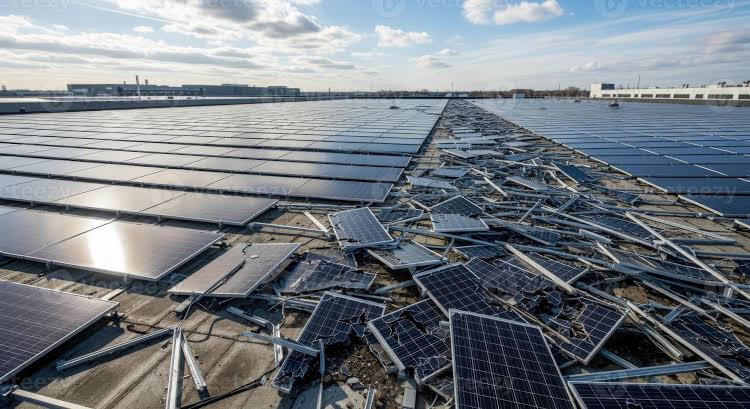
An expired solar panel.
The challenge is particularly important because Nigeria is rapidly expanding off-grid electrification.
Through solar home systems, mini-grids and commercial installations, thousands of new solar units are being deployed every year. Many of these systems are located in communities where formal waste collection services are already weak.
Without clear take-back programmes, producer responsibility regulations or specialised recycling facilities, many retired components could end up in informal dumpsites.
Yet experts insist the story is not entirely negative S because solar waste is also an economic opportunity.
Glass, aluminium, silicon, copper and other materials contained in solar panels can potentially be recovered and reused. Around two-thirds of a typical solar panel's weight consists of glass, which can be recycled if appropriate facilities exist. Researchers argue that building a circular economy around solar equipment could create jobs while reducing environmental risks.

For now, public discussions about Nigeria's energy future tend to focus on power generation, transmission infrastructure, fuel prices and investment flows. Rarely do they consider what happens decades later when the technologies powering that future become waste.
The panels glittering on rooftops today are helping households escape darkness. Yet somewhere in the future, those same panels and batteries will require safe collection, transportation and recycling. The question is whether Nigeria will prepare for that future before the waste begins to pile up.