By Oke Peter
The Dangote Refinery Initial Public Offering (IPO) deserves recognition for one important reason: it opens part-ownership of one of Africa’s most ambitious industrial projects to ordinary Nigerians. The offer of 4.1 billion shares at ₦525 each could raise about ₦2.15 trillion, with the proceeds earmarked largely for expanding the refinery and petrochemical business. The offer opened on September 14 and closes on October 13, 2026.
That is significant for Nigeria’s capital market. Bringing a major privately owned industrial asset into broader public ownership can deepen the Nigerian Exchange, widen investment opportunities and potentially keep more Nigerian savings invested in productive enterprise.
But Nigerians should applaud the opportunity without romanticising it. The central question is not simply whether Dangote Refinery is an important Nigerian asset, it plainly is. The more important question is: what happens if millions of Nigerians divert trillions of naira of their hard-earned savings into one company because they expect quick and spectacular returns?

•President of Dangote Group, Alhaji Aliko Dangote (left), the Emir of Kano, Alhaji Sanusi Lamido Sanusi (middle) and others at the sensitisation programme on Dangote Refinery IPO for prospective investors in Kano, recently.
An IPO does not simply make money disappear from the economy. Investors exchange cash for shares, while the company receives capital to invest in productive capacity. If that capital finances expansion, creates jobs, increases domestic refining and generates future profits, the wider economy can benefit.
However, Nigeria's broad money supply was already about ₦133.25 trillion in June 2026, according to Central Bank of Nigeria (CBN) data reported from its money-and-credit statistics. If households move substantial amounts of their available savings into this single offer, they will have less money available for other investments, business expansion, consumption, education, housing or emergency needs. For households already struggling with high living costs, tying up scarce savings in shares can become painful if expectations are not met.
Nigeria's economic circumstances make this caution particularly important because the International Monetary Fund (IMF) estimates 2026 real GDP growth at 4.1 percent, while average consumer-price inflation is projected at 16 percent. It also reports that 63 percent of Nigerians were living below the national poverty line and that 27 million people faced food insecurity in the fall of 2025. In such an environment, ₦100,000 is not merely investment capital for many families; it may also represent rent, school fees, food money or a financial safety net.

•Alhaji Aliko Dangote
Subscribers should know that a popular company is not necessarily a guaranteed high-return investment. The refinery's own IPO materials explicitly warn that share prices can rise or fall and that investors may lose some or all of their investment. Dividends are also not guaranteed; they depend on company performance, cash requirements and board decisions.
The refinery itself has disclosed material business risks. Among them is crude-oil supply. Its prospectus warns that inadequate or disrupted crude supplies could reduce throughput, increase costs and weaken refining margins. That matters because a giant refinery can be strategically important and still face commercial risks.
Prospective subscribers should therefore resist the temptation to borrow heavily, sell essential assets or empty bank accounts merely because they fear missing out. An IPO is an investment, not a government-backed savings scheme.
There is also a legitimate public-policy question about timing because Nigeria is approaching the 2027 general election, and politicians are already operating in an increasingly politically charged environment. Could the excitement surrounding a high-profile IPO be exploited politically? It is reasonable for citizens to ask that question. But there is presently no verified evidence that the Dangote IPO itself is a political strategy for the 2027 election. Such a claim should not be presented as established fact without evidence.
The wiser approach is to separate the refinery's economic importance from political speculation.
The IPO can be welcomed as a potentially important step toward broader Nigerian ownership of productive assets. At the same time, investors must understand that patriotism is not an investment strategy. Neither is celebrity, political excitement or the promise of getting rich quickly.
The Securities and Exchange Commission (SEC) has specifically told investors to read the approved prospectus, use only authorised subscription channels and beware of unsolicited messages or anyone promising guaranteed allocations or returns.

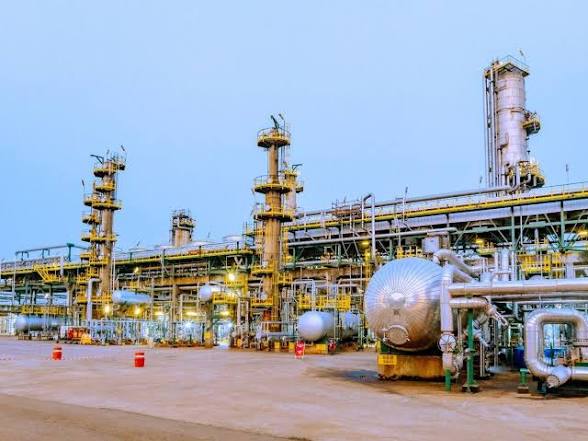
•Dangote Refinery complex in Ibeju Lekki, Lagos.
The real success of the Dangote IPO should therefore not be measured by how many trillions Nigerians can raise for it. It should ultimately be measured by whether the investment produces sustainable economic value for the company, its shareholders and Nigeria.
Dangote Refinery may be a landmark Nigerian enterprise, but Nigerians must not turn an investment opportunity into an economic gamble.