By Gold Jeremiah
Darkness does not always mean danger has passed, in fact, some of the worst electrocution accidents happen when people believe there is no electricity simply because their bulbs have gone off.
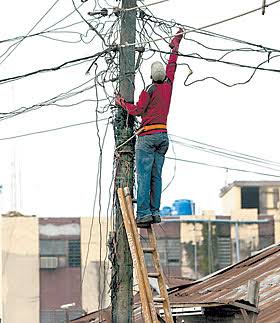
Imagine a neighbourhood suddenly experiences a blackout – the television goes off, fans stop spinning and the entire street is plunged into darkness. Convinced that power has been cut, a resident decides it is the perfect time to repair a faulty socket without switching off the main circuit breaker. At the same time, another person climbs a ladder to remove a tree branch resting on a nearby power line, believing the line is "dead."

Minutes later, one person is severely electrocuted inside the house, while the other suffers fatal injuries outdoors.
How could this happen when there was no light?
The answer lies in the way electricity is supplied and controlled. A power outage does not always mean every electrical line has been de-energised. Sometimes, only one phase of a three-phase supply fails while another remains live. In other cases, a fault may affect lighting circuits but leave other parts of the electrical installation energised.
Utility companies may also restore electricity remotely without warning and what appears to be a prolonged outage can end within seconds as operators reconfigure the network or automatically restore supply after clearing a fault.
There are also situations where electricity is present even when the public grid is off. Homes, offices and businesses equipped with generators, solar power systems or battery inverters can continue supplying electricity to selected circuits. If these systems are improperly installed without adequate isolation, they can energise wiring that people mistakenly believe is safe to touch.
This hidden danger is one reason electricians follow a simple rule: Never assume a wire is dead. Test it first.
Professional electrical workers do not rely on darkness or silence as proof that electricity is absent. They use approved voltage testers and isolate power at the source before beginning any repair. They also apply lockout procedures to prevent anyone from restoring power while maintenance is in progress.
Outdoor electrical equipment presents similar risks.
A fallen power line may look harmless because there are no sparks or flames. Yet it can still carry thousands of volts. Even if the conductor is broken, electricity can spread through wet ground, metal fences or pools of water, creating what engineers call "step potential." A person may be electrocuted without ever touching the wire directly.
Rainy weather increases the danger. Water lowers electrical resistance, making it easier for current to pass through the human body. This is why standing in floodwater near damaged electrical equipment or attempting to move a fallen cable can be deadly.
Another overlooked hazard is the belief that switching off an appliance makes it completely safe. If the appliance remains plugged into a faulty socket or damaged extension cord, exposed live parts may still pose a risk, especially if the switch only disconnects one side of the circuit.
Electrical safety experts therefore advise that repairs should begin only after disconnecting power from the main switch or circuit breaker and confirming with a testing device that no voltage is present.
The lesson is simple but lifesaving: No light does not always mean no electricity.

Whether at home, at work or on the street, never touch exposed wires, damaged sockets, electrical panels or fallen power lines simply because the neighbourhood is in darkness. Leave outdoor electrical faults to the electricity distribution company, and indoor repairs to qualified electricians.
Electricity cannot be seen, smelled or heard. It gives no warning before it strikes.
The next time the lights go out, remember this: darkness is never proof that electricity is gone. Treat every wire as if it is live until it has been properly isolated and tested. That single precaution could save a life.